The DRIP Workflow

What to Produce & Why

This training teaches you how to find winning ideas, develop them further, and decide what gets produced. The technical how-to is covered in a separate training. Study every section in detail — this is your daily playbook.

The DRIP Method

D
Discover
Find winning content through daily research
R
Rate
Analyze why it works using our framework
I
Improve
Develop with the 4 Pillars method
P
Produce
Execute at highest quality with strong editing
Stage 1 — Discover & Rate

Research & Evaluation

Find the best ideas before your competition does. Systematic research is the foundation of everything that follows.

1.1

For-You-Page Research Setup

Create 2 private Instagram research accounts and train them on your relevant niches. Scroll, interact, like — until your For-You-Page only shows relevant content. This is your daily radar.

Checklist:

  • Create 2 research accounts (research only, no posting)
  • Train accounts on your niche by actively engaging
  • 1 hour of daily research as a fixed routine
  • Feed everything relevant into the database immediately
1.2

Competitor Tracking & Winning Patterns

We have a database where you can add competitor and reference accounts. Every night, we automatically pull new data — new reels get flagged as outliers and analyzed by AI using our framework. Every morning, you see what went viral overnight and why.

Important: This is a support tool to track competitors — not a replacement for your own research. The AI analysis gives you a starting point, but your own judgment is what matters. Always form your own opinion on why something works.

How it works:

  1. 1. You add an Instagram account to the database
  2. 2. We automatically fetch new reels & stats every night
  3. 3. Outliers are flagged & reels with high views in the last 24h are marked as trending
  4. 4. AI analyzes each outlier using our analysis framework
  5. 5. You check the dashboard each morning and work from there
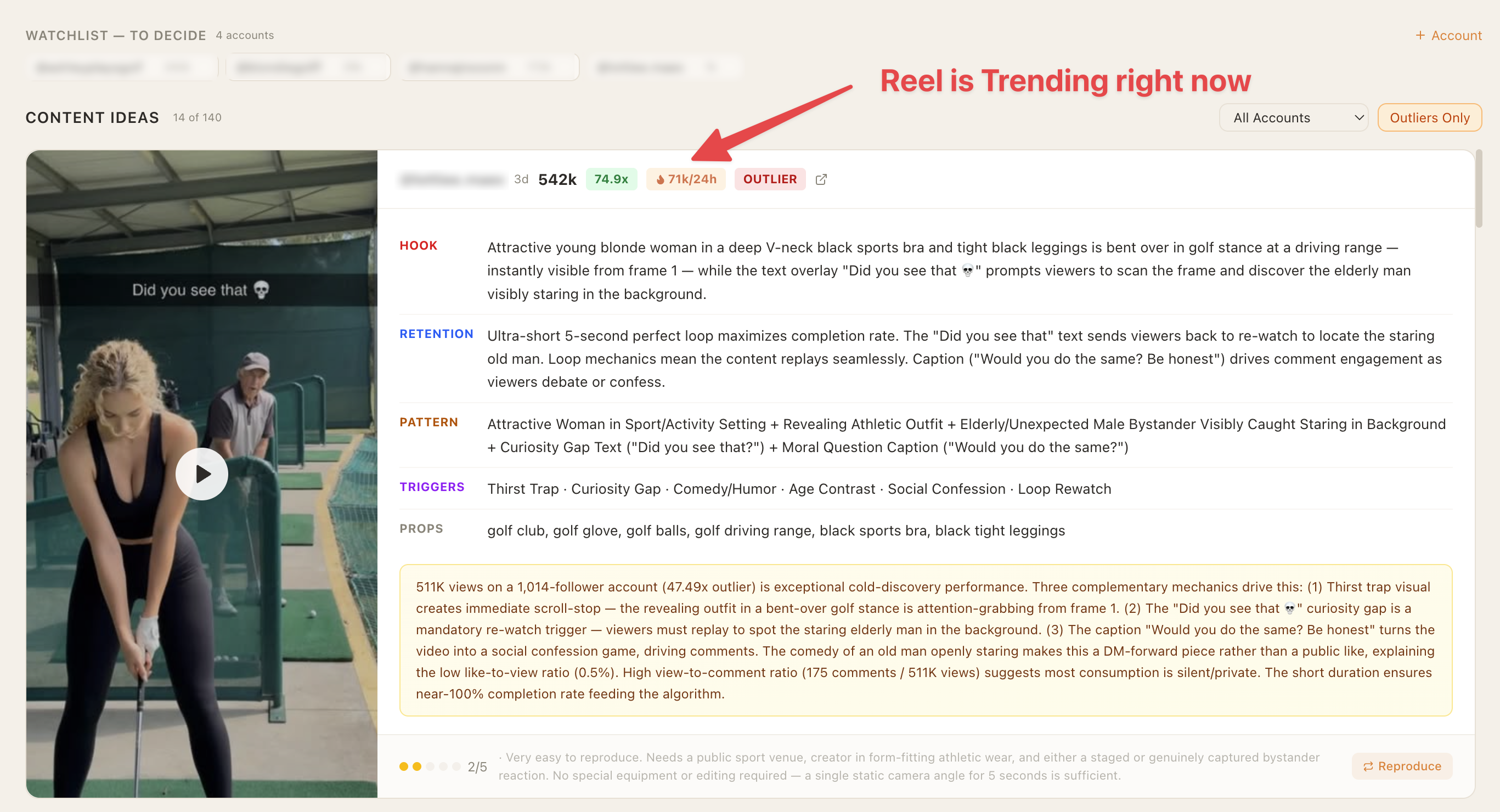
Competitor Tracking Dashboard
1.3

Reel Analysis: Why Does It Work?

For every winning reel, you must be able to answer: "Why does this work?" — Use the analysis framework to systematically break down every reel.

Component Questions to Answer
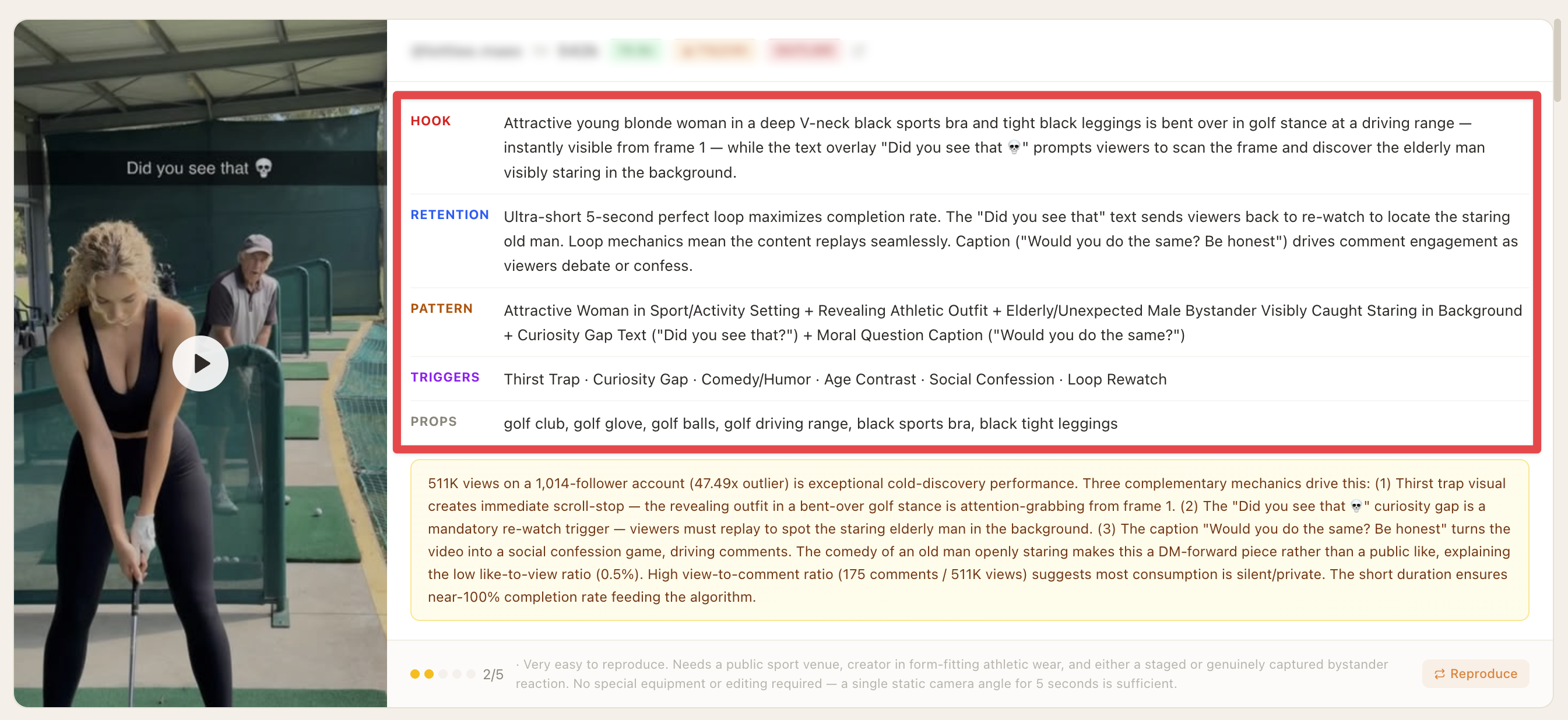
HookWhat's the hook? Why do you stop scrolling? Visual or text-based?
RetentionThe most important metric. What keeps the viewer watching until the end?
FormatWhich format? Talking, Chat Story, Omegle, Skit?
PatternWhat's the reproducible pattern? Outfit, position, setting, reaction?
ControversyIs there a polarizing element? Something that triggers comments, shares, debate?
Reel Analysis Example
Stage 2 — Improve

Improve What's Already Working

Don't copy. Improve. You found a winner — now make it better. The 4 Pillars are your systematic guide to develop ideas further and outperform the original.

The Rule: Before you produce anything, sit down for 10 minutes and systematically work through the 4 Pillars. No exceptions.

2.1

Pillar 1 — Technical Quality

"Does it look better than the original?" — This is the foundation. If the face doesn't look like our character, if body proportions shift between scenes, if small details are off — the whole reel becomes unbelievable. Technical quality is what makes or breaks credibility.

Levers:

  • Base image → #1 foundation. Bad base image = bad video. Get this right first.
  • Lighting → Shadows, time of day, sun rays, light direction, reflections on glass/mirrors
  • Posing → Candid "shot in the moment", not staged. Mid-action, natural weight shift
  • Setting/Background → Realistic, scene-appropriate environment that sells the scene
  • Video model choice → Reel-dependent. Different models, different effects — pick what fits
  • Motion quality → Natural movements, no glitches, meets our quality standards
  • Character consistency → Same face and body proportions across all scenes
  • Branding & identity → Uniform details, outfits, recognizable look — instantly identifiable
  • Voice & lip-sync → Natural speech, accurate lip movements, no desync
  • Skin → Real skin has texture, pores, imperfections. Avoid the smooth AI plastic look
  • Realistic look → AI defaults to overly polished. Add grain, noise, imperfections — real photos aren't perfect
  • AI-tell elimination → Spot and fix anything that screams "this is AI"

Most of these are driven by your prompts. Be intentional — every detail you specify is a detail you control.

Examples:

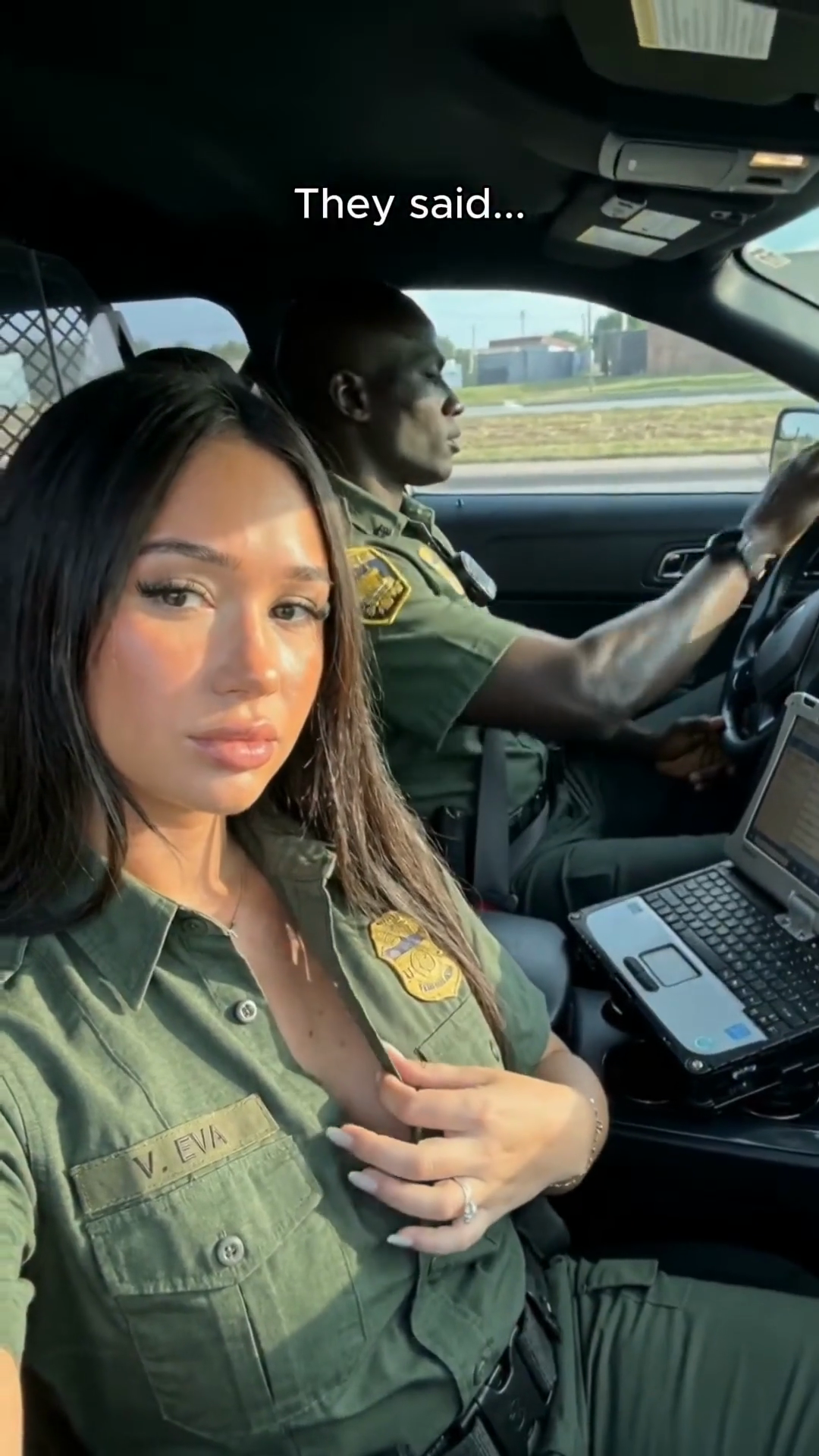
Realistic police car (real car used as reference). Ultra-real movements. Real-world situation, relatable. Attention to detail: tan lines, sexual twist with belly visible. Sound matches the content.

Ultra-real movements. Voice & lip-sync very realistic. Natural emotions, no weird AI overreactions. Attention to detail: same badge on uniform, tan lines, real car.

Character consistency — her USP (large bust) is maintained. Shaky camera makes it feel natural. Selfie perspective very believable. Voice & lip-sync natural. Great emotions.

2.2

Pillar 2 — Storytelling & Concept

"Can I tell a better story with this concept?" — You have a winning idea. Now think about how to frame it better — a stronger hook, a clearer arc, a twist that makes people rewatch. This pillar is about the idea and how you present it, not the visuals.

Levers:

  • Hook → What's the opening? Is it sharper than the original? Does it stop the scroll in 0.5s?
  • Story arc → Build a setup → tension → resolution instead of just one flat scene
  • Controversy / provocation → Add a polarizing angle that makes people comment and share
  • Setting adaptation → Take the concept to a new context (Boxing → Military, Café → Gym)
  • Scene believability → Make individual scenes more realistic and emotionally convincing
  • Curiosity gap → Raise a question early that only gets answered at the end
  • Loop potential → Build the ending so viewers watch it again from the start

Example Breakdown:

Good scenes and storytelling paired with high quality looks and attention to detail.

Scene 1

Controversy — The situation itself draws attention. People stop, react, and comment.

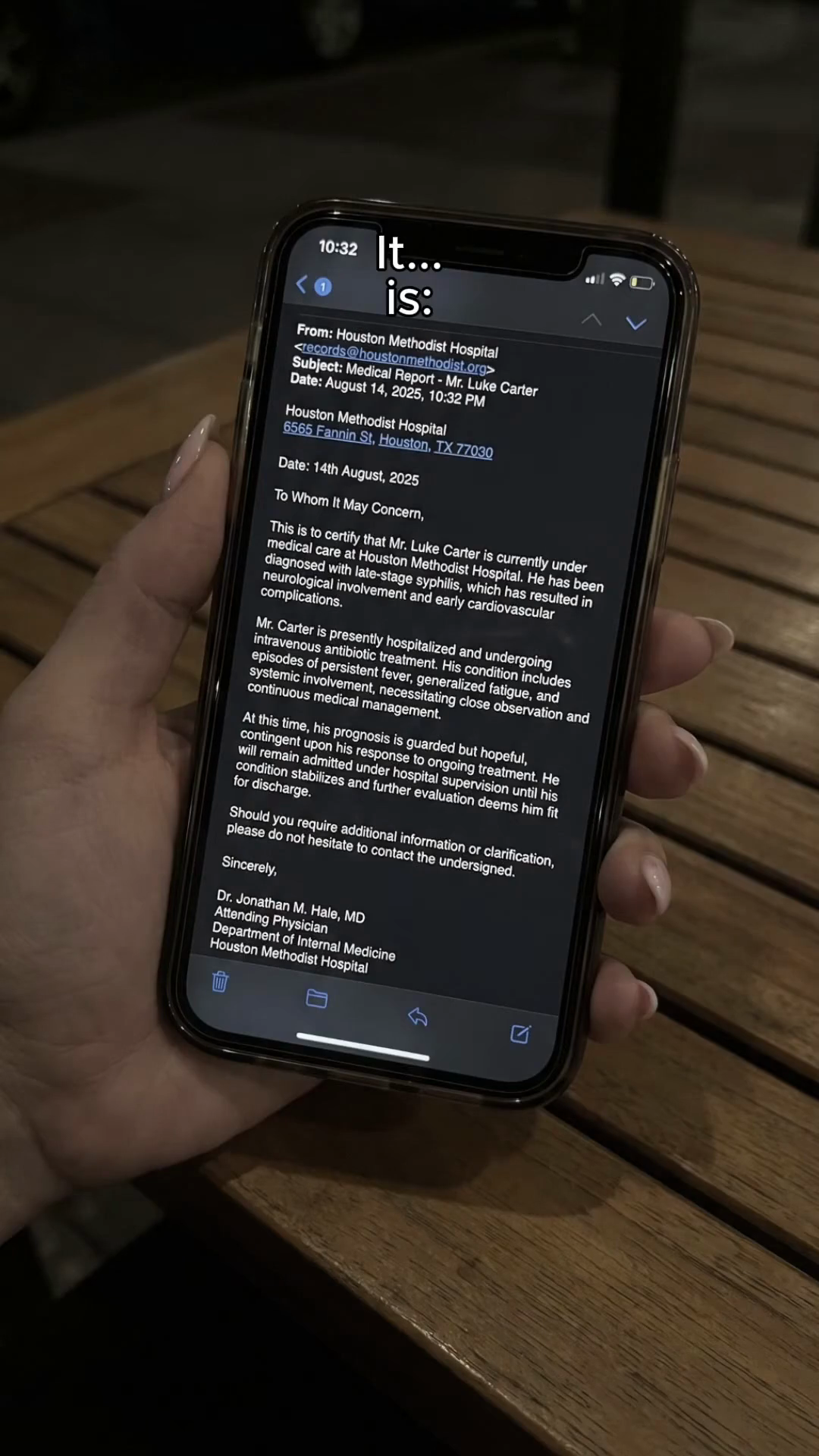
Scene 5

Extreme scene detail — Real text on a phone screen. People stop the reel to read it. That's retention.

2.3

Pillar 3 — Adapt to Your Character

New

"How do I make this concept work for my character?" — You found a winning reel from someone else's account. Now adapt it to your character's world — their look, their USP, their branding. The idea stays, everything else gets tailored.

Levers:

  • Character USP → What makes your character special? That must come through in every reel
  • Outfit & branding → Does the outfit fit your character and the scene? Stay on-brand
  • Setting adaptation → Same idea, but placed in your character's world
  • Props & details → Objects and details that fit your character and make the scene believable
  • Text & overlays → Captions and visual elements that match your branding style
  • Retention elements → Timer, countdown, curiosity hooks — where it makes sense
2.4

Pillar 4 — Editing & Polish

"Can I make this reel even better through editing?" — This is the last 10% that turns good reels into outstanding ones. Most people skip this. That's exactly why it's your edge.

Levers:

  • Sound & music → Right track, synced to the content, sound effects that hit at the right moment
  • Captions & text overlays → Readable, well-timed, well-placed — adds context without cluttering
  • Pacing → Does the reel feel right? No dead moments, no rushing — every second earns the next
  • Color & tone → Consistent grading that fits the mood and your character's branding
  • Final QA → Watch the full reel 3x before posting — if anything feels off, fix it

Attention to detail: If you have a text overlay style that works for your branding — keep it consistent. Snapchat-style text, Instagram-style captions, a specific font or placement — these small details build recognition. Don't switch randomly between styles.

Examples:

Stage 3 — Produce

Content Production

You've done the research, you've planned the improvements. Now execute. Generate, adapt, apply the 4 Pillars, and ship.

3.1

Execute & Ship

The technical production process is covered in a separate training. This section is about what happens before you deliver — the final quality checks that prevent revisions and wasted time.

Pre-Delivery Checklist — Challenge yourself before you ship:

  • Character consistency — Same face and proportions in every scene?
  • Branding details — Uniforms, outfits, accessories exactly right?
  • Attention to detail — Text overlays, props, background all look correct?
  • Body & appearance — Same build as your character, no AI distortions?
  • Watch it fresh — Play the full reel once more. Anything off? Fix it.

Goal: Zero revisions. Every revision wastes your time and your lead's time. Challenge your own work before delivery.

The benchmark: When you send the reel to your teammates, their reaction should be "Wait — is this even AI?" If it doesn't hit that level, it's not done.

Advanced

Pro Methods

Once the fundamentals are locked in: test new formats, evolve your methods, stay ahead of the competition.

A.1

Content Formats

New

Understand the different content formats and regularly test new ones. Many formats have almost zero competition — if you're one of the first to do it well, the upside is massive.

Formats:

  • Talking Reel
  • Omegle
  • Chat Story
  • Comment Reactions

Formats with Different Goals:

  • Retention Rate Format
  • Caption Bait Reels
  • Follower Bait Reels
  • Comment Bait Reels

Talking Reel

Omegle

Chat Story

A.2

Trial Reels — Test New Formats

Test new formats risk-free. Trial reels are shown to non-followers — they don't hurt your account. Keep your main workflow running, experiments happen in parallel.

Note: Not every account has the trial reel option. Ask your team lead if it's available for your accounts.

Checklist:

  • Test at least 1 new content format per week
  • Trial reels run parallel to your normal workflow
  • Shown to non-followers → zero risk to the account
  • Track results and promote successful formats to the main workflow
  • Never interrupt your current workflow for experiments

Your Daily Routine

Morning 1 hour mandatory — Discover & Rate
1 Scroll 2 research accounts (FYP trained on niche)
2 Check overnight AI analysis and competitor database
3 Analyze each winner: Hook, Retention, Format, Pattern, Controversy
Main Block Improve & Produce
1 Decide what to produce from morning research
2 Per reel: 10min 4 Pillars development
3 AI generation at highest quality
4 Editing & polish: sound, captions, pacing, text overlays
5 Pre-delivery checklist → submit
End of Day Review & Learn
1 Review your work: what can you improve?
2 Check out with team